Red Hat Summit Connect 2025: the Future of Open-Source Technologies
This year’s Red Hat Summit Connect 2025, held in Opatija, brought together leading IT experts, engineers, an...
Read more


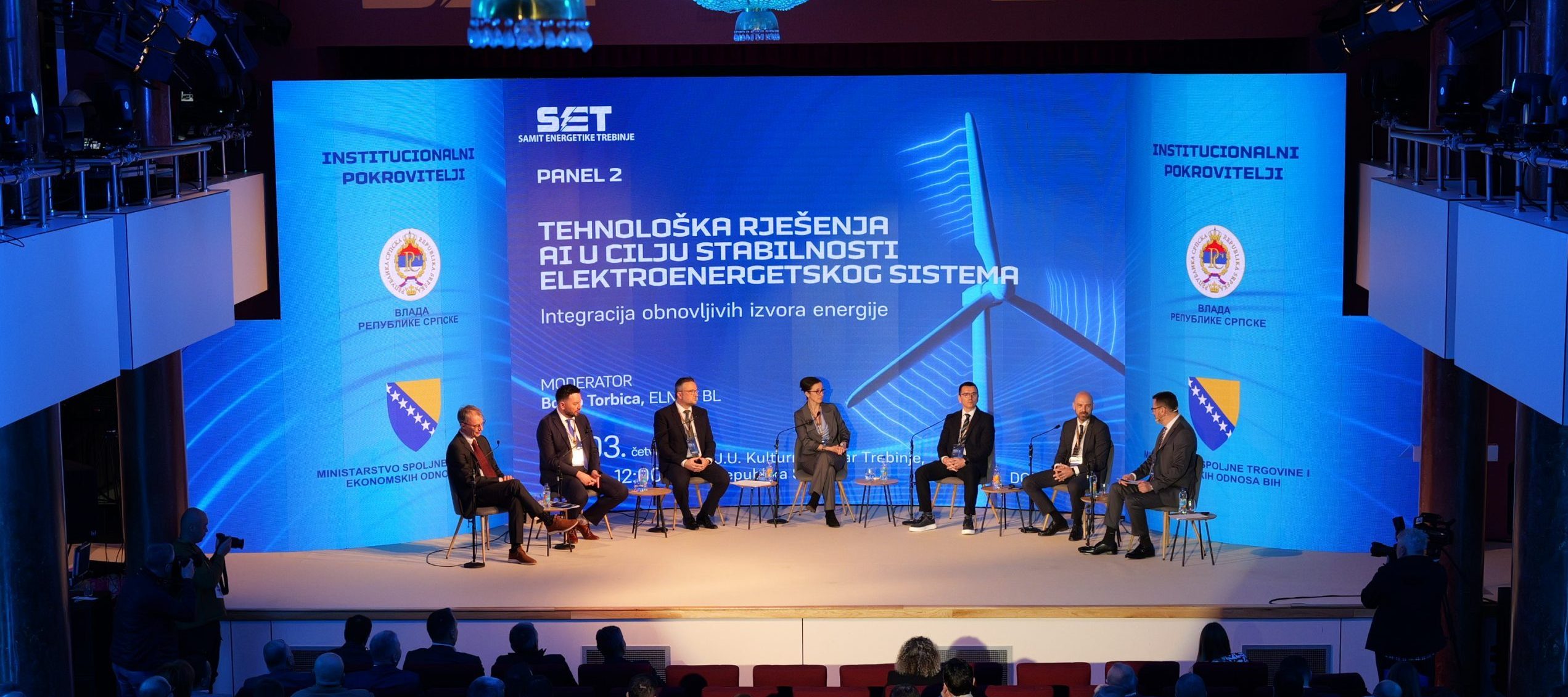
How are climate challenges affecting the stability of power systems? Are we truly prepared for a transition that demands both environmental and social responsibility — and how far have we actually come? Can artificial intelligence contribute to a more secure and resilient grid?
These and many other questions took center stage at the 6th Energy Summit in Trebinje — an event that can no longer be seen as just another sectoral gathering, but as a space where the real challenges and opportunities of the region’s energy future are being defined.

This year’s Summit brought a wide range of topics to the table – from climate challenges and market mechanisms, to cutting-edge technologies like AI tools for system balancing, and serious conversations around energy storage, PPA contracts, and regulatory hurdles shaping the investment landscape in renewables.
One of the most important takeaways was the pressing need for a unified and integrated approach — infrastructure, technology, and markets must evolve together, not separately. Strengthening the transmission grid, boosting system resilience, and aligning with European mechanisms such as ETS and CBAM clearly show that the transformation of the energy sector is not just a technical task, but an economic and strategic endeavor.
For Ibis Solutions, the Summit was a valuable opportunity to engage in dialogue, exchange expert insights, and showcase the digital solutions we’re developing – with a strong focus on their real-world application in modernizing and optimizing energy systems.
Our discussions with system operators, investors, and public sector representatives once again confirmed the market’s need for solutions that not only track complex energy flows, but also enable fast, accurate responses to real-time system changes.
Today, the stability of energy systems hinges on the ability to rapidly process data, simulate real-time operations with precision, and make decisions grounded in actual operating conditions. Digital technologies make this possible – offering practical support to systems in transition, through reliable analytics and automated, data-driven action.

If you share our belief that system stability should be the result of thoughtful decisions, smart tools, and deep expertise – we’d be glad to continue the conversation. Reach out, let’s connect, and explore concrete solutions for the energy sector together.